Before and after — educational, not testimonials
These are composites of the rejection reasons regulators and principal contractors publish. They are not quotes from SWMS Kit customers. We do not invent reviews.
Another job’s hazards
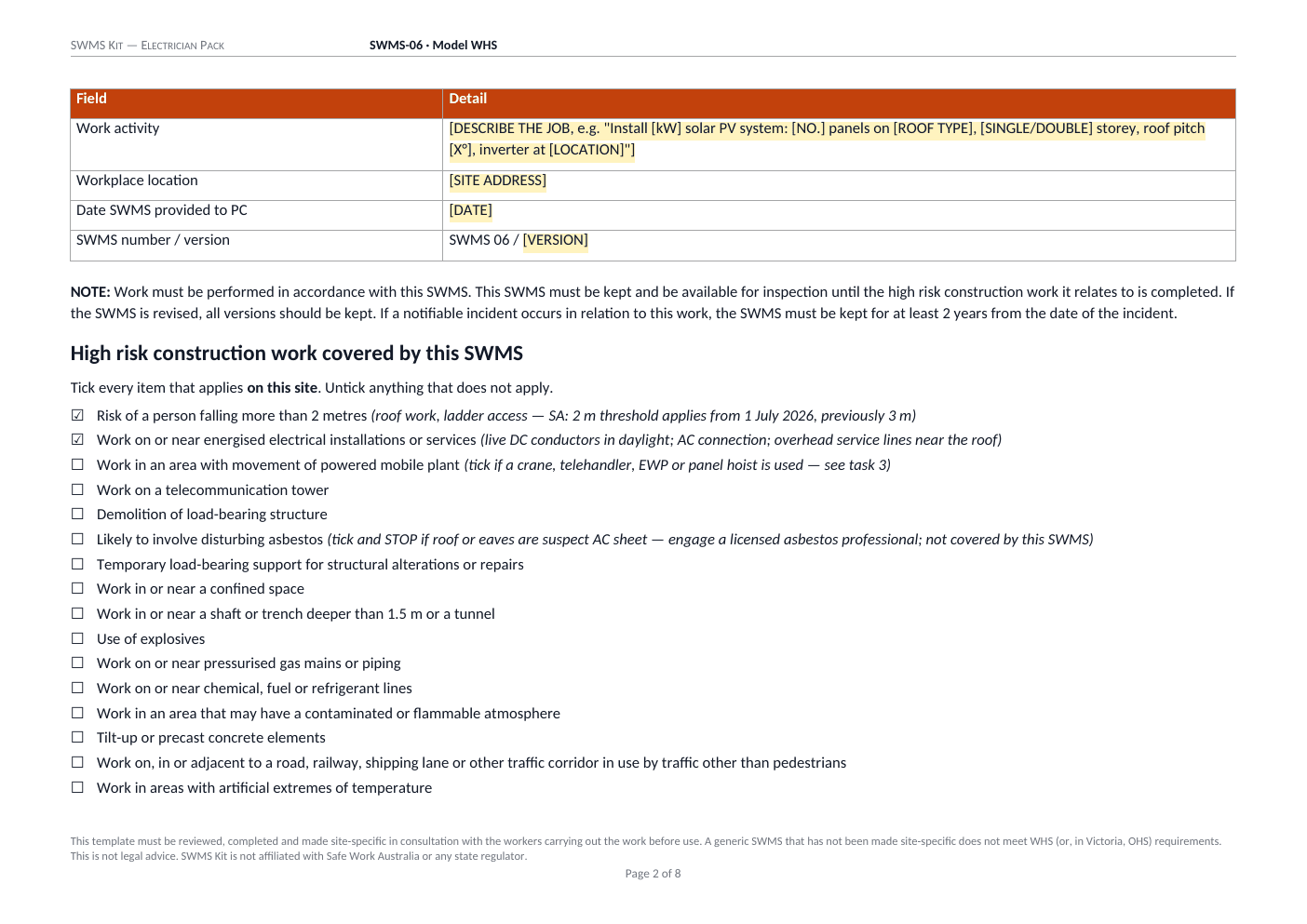
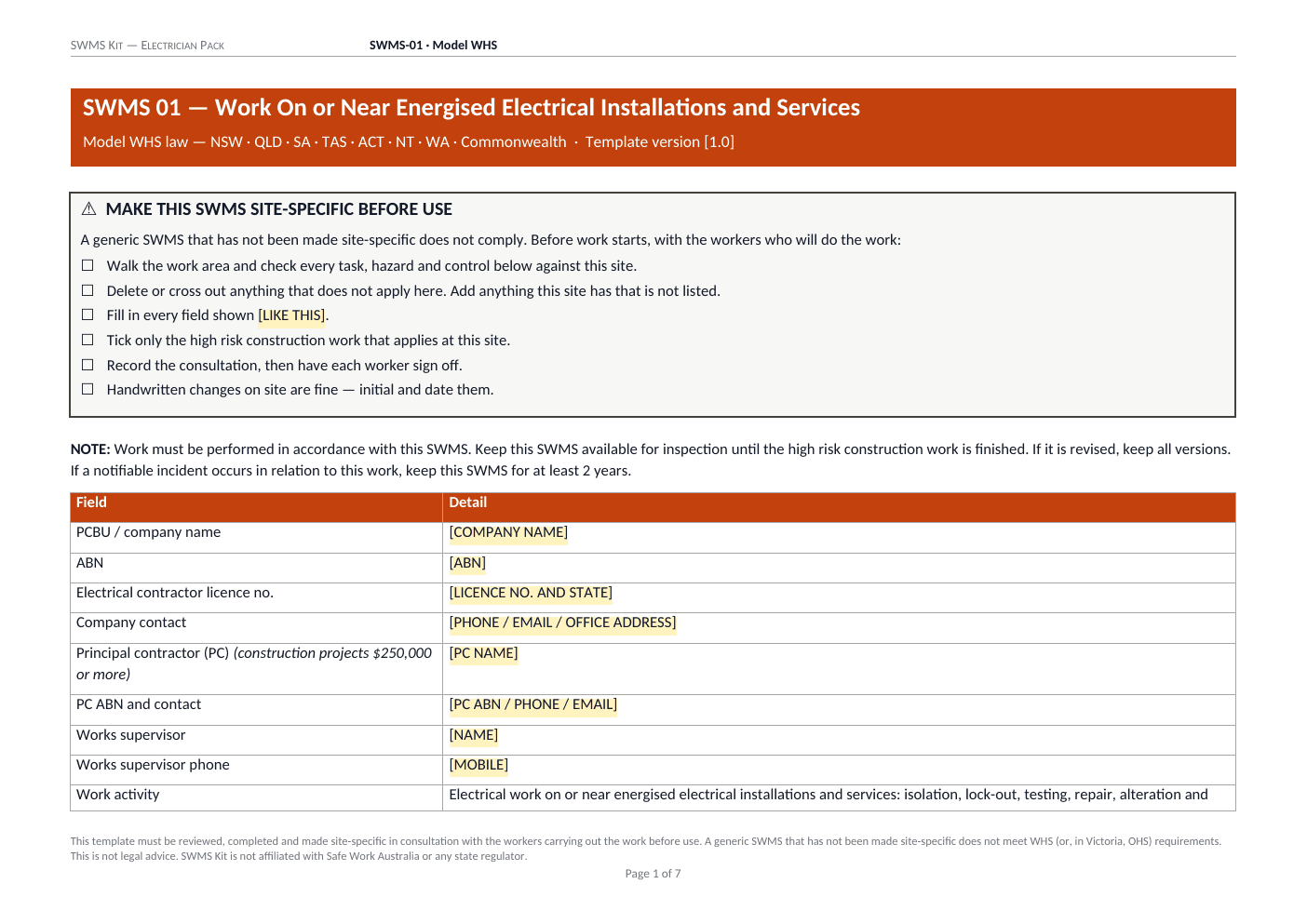
Before: a solar SWMS with a trench and a confined space left over from the last file. The address was blank. Sent back at the gate.
After: the address is this roof, the fall controls match this edge, and the trench lines are gone because this job does not have one.
Grouped hazards
Before: one cell that says “electrical, falls, manual handling” and one cell of PPE. An auditor cannot see which control belongs to which task.
After: each task has its own hazards, controls, how they are implemented, and a named person. That is the five-column table.
The Victorian header swap
Before: a model-law SWMS with “WorkSafe Victoria” typed over “PCBU”. Still 18 categories. Still no HSR line.
After: the Victorian file, 19 categories, employer wording, consultation with employees and HSRs.
Three metres in South Australia
Before: a falls line that still says 3 metres, used on a SA job after 1 July 2026.
After: 2 metres, which is the threshold SafeWork SA applies from that date.